
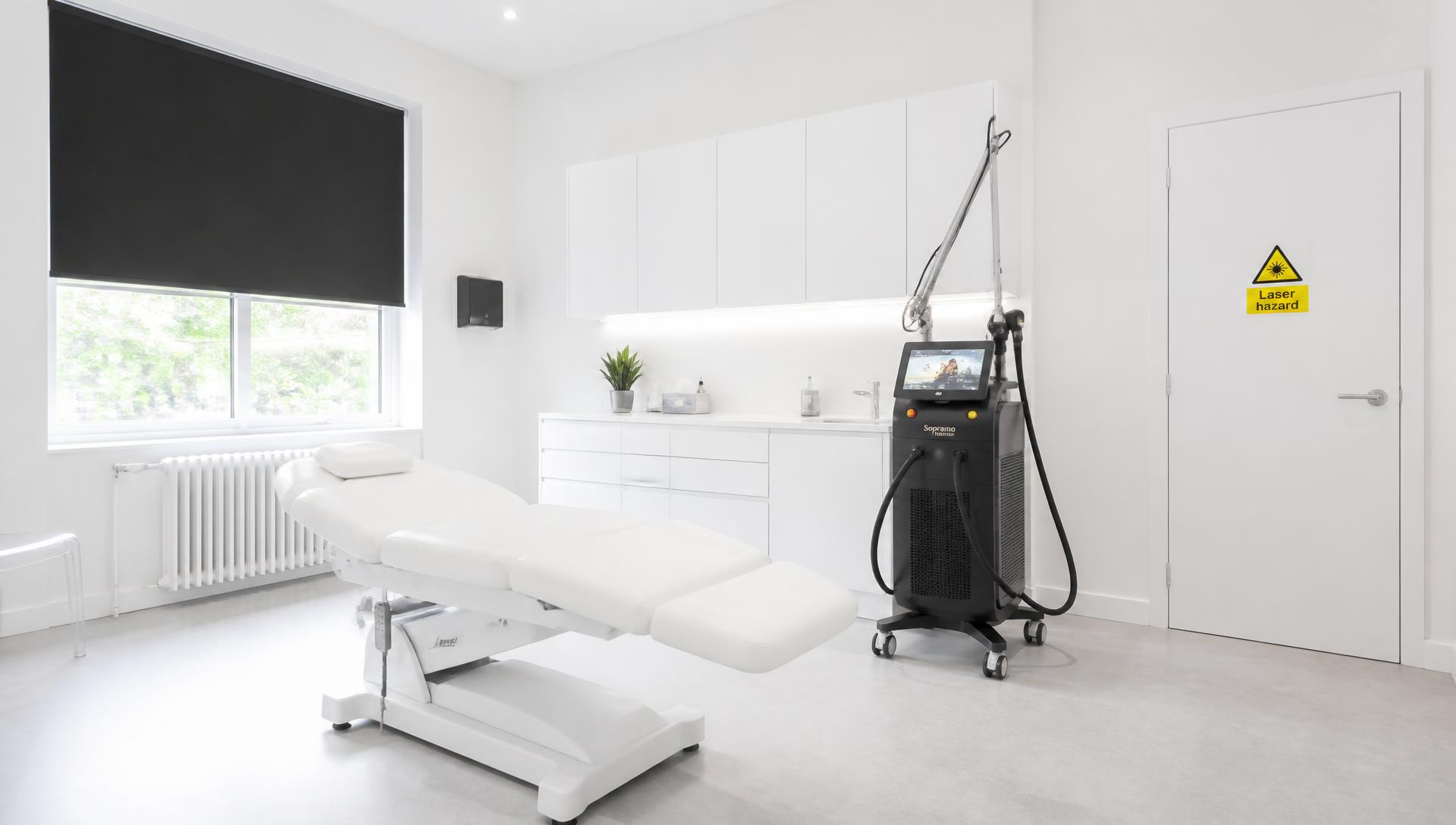
A compliant laser hair removal room needs controlled access with warning signage, no uncontrolled reflective surfaces, blackout at windows, a standard 13A supply for most diode platforms, wavelength-matched eyewear for everyone present, and space to work all four sides of the couch. Around 9–12 m² is comfortable.
- Room checklist
- Power and space
- Signage and safety
- Comfortable room
- 9–12 m²
- Power
- 13A standard socket
- Setup cost
- £600–£2,000
Size and layout
Nine to twelve square metres is comfortable for one couch, one machine on castors, a trolley and storage. Below about seven square metres you start reversing around the couch, which quietly adds minutes to every large-area treatment and shows up as fewer bookings per day.
Put the machine on the operator's dominant side with the umbilical routed so it never crosses a walkway. Position the couch so you can work head, foot and both flanks without moving furniture.
Costed setup checklist
| Item | Typical cost | Notes |
|---|---|---|
| Laser warning signage and door control | £40–£150 | Required during treatment |
| Wavelength-matched eyewear (×3) | £120–£400 | Operator, client, observer |
| Blackout blind | £80–£250 | Any window in the controlled area |
| Electric treatment couch | £400–£1,200 | Height adjustment protects the operator |
| Trolley, gel, coolant, consumables | £120–£300 | First three months |
| Local rules and risk assessment | £0–£250 | Often included with training |
Power, cooling and ventilation
Most diode platforms in the 600–1,200 W class run from a standard 13A socket on a dedicated circuit. Confirm the requirement in writing before delivery; a small number of high-power medical platforms need more. Give the machine breathing room — air-cooled chassis pull air through side vents, and a unit pushed tight into an alcove throttles itself and trips thermal protection mid-list.
Safety controls that inspectors look for
- Door signage displayed and access controlled while the machine is keyed on.
- Key removed and stored separately when the room is unattended.
- Eyewear matched to the wavelengths in the room, checked for scratches.
- Blackout at windows; no mirrors or polished trays in the beam path.
- Local rules displayed, risk assessment on file, incident log available.
Client experience is part of the room
Cool the room slightly below the rest of the salon; treatments generate heat and clients notice. Keep noise down where you can — a quiet chiller makes a machine feel more clinical than any brochure. Somewhere to hang clothes, a clean gown and good task lighting do more for rebooking than any upgrade on the console.