
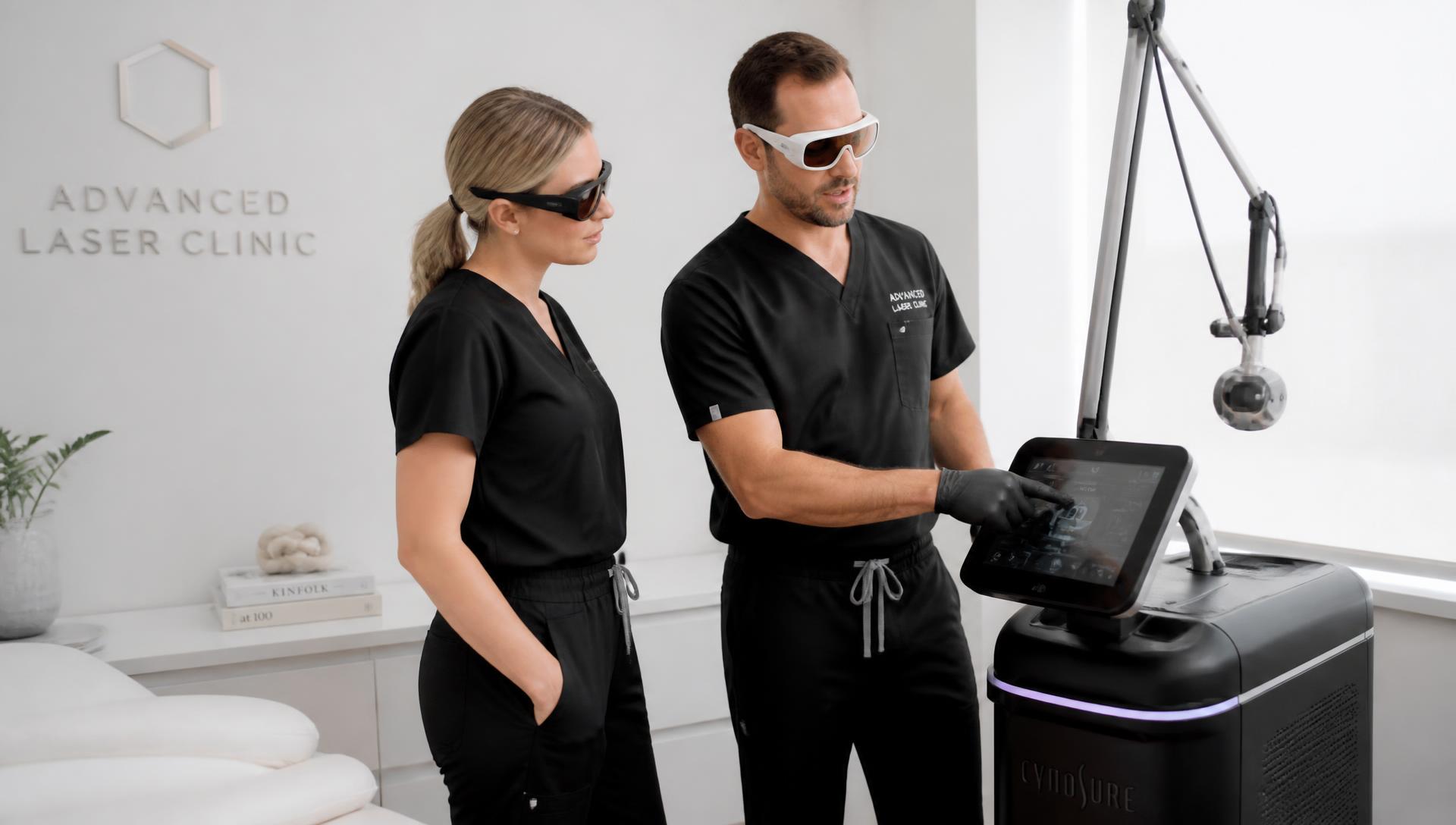
UK laser and IPL operators need core-of-knowledge laser safety training plus device-specific training on the exact machine they use. Insurers require certificates naming both the operator and the technology, and most local authorities ask for them at licensing. Level 4 laser and IPL qualifications are the widely accepted benchmark.
- Insurer-aligned
- Device-specific
- Refresher schedule
- Benchmark
- Level 4 laser/IPL
- Device training
- Machine-specific
- Refresh
- Every 2–3 years
The certificate stack
| Layer | Covers | Who asks for it |
|---|---|---|
| Core of knowledge | Laser physics, hazards, controlled areas, eyewear, local rules | Local authority, insurer, LPA |
| Level 4 laser and IPL | Skin typing, contraindications, parameters, adverse events | Insurer, local authority, clients |
| Device-specific training | Your machine's parameters, cooling, handpieces, safe settings | Insurer, manufacturer warranty |
| Refreshers | Changes in practice, new technology, staff turnover | Insurer at renewal |
The layers are cumulative. A Level 4 qualification does not substitute for training on the specific platform in your room, and device training does not substitute for laser safety knowledge. Auditors look for both.
Nation by nation
Requirements differ across the UK. Scotland regulates independent clinics through Healthcare Improvement Scotland. Wales and Northern Ireland operate their own registration regimes. In England, local authority special treatment licensing is the practical gate, and requirements vary between councils.
What good device training looks like
- Delivered on your machine, in your room, after installation.
- Covers parameter selection across Fitzpatrick I–VI, not just a default preset.
- Includes patch testing protocol and adverse-event response.
- Includes cooling, handpiece care and daily checks.
- Ends with a certificate naming the operator, the machine and the date.
Records that survive an audit
Keep one folder — physical or digital — holding training certificates, local rules, the risk assessment, servicing and calibration certificates, the insurance schedule naming the machine, consultation and patch-test records, and an incident log. When a council officer or insurer asks, the folder answers in one pass.